
How has Old Madras Road changed?
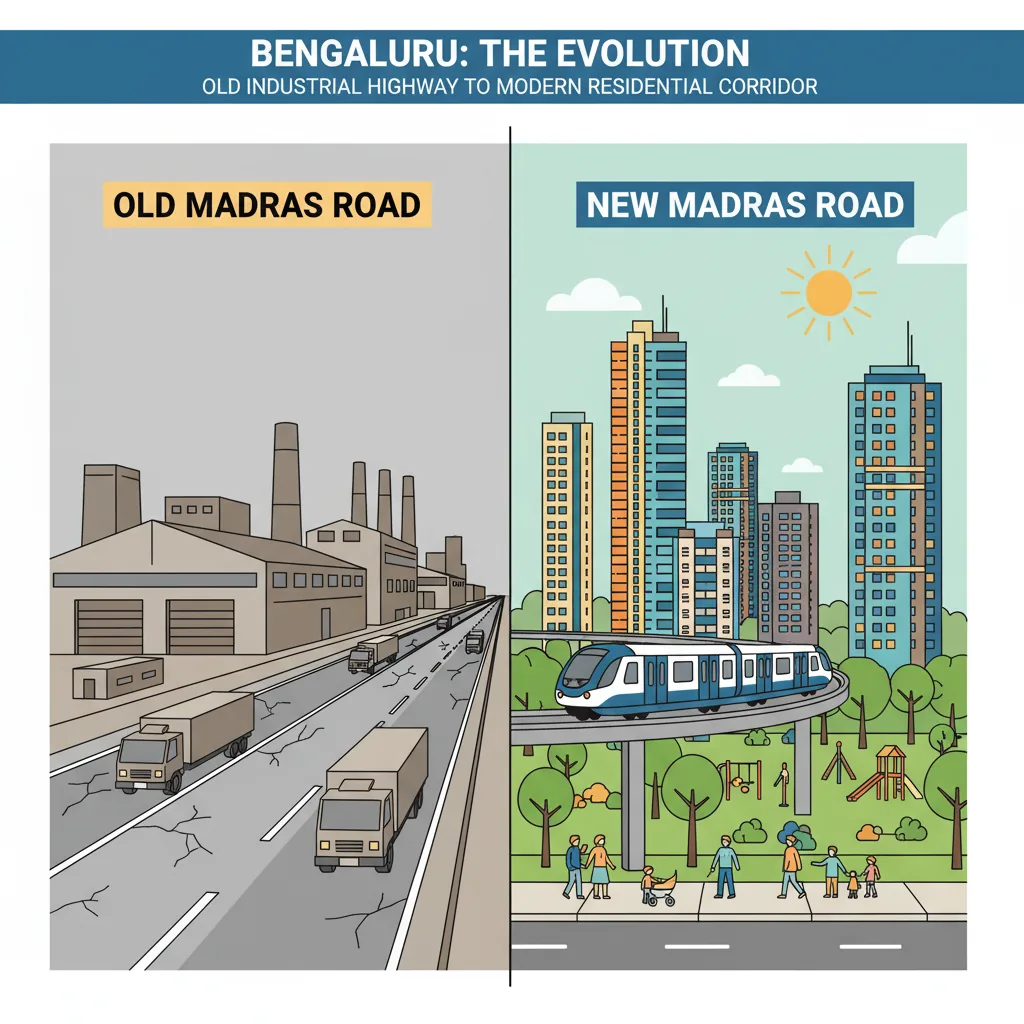
How has Old Madras Road changed? If you have traveled along this stretch in the last few years, you have likely noticed a massive shift. Once known primarily as a busy highway for trucks and inter-city traffic, it has transformed into one of Bengaluru's most desirable residential corridors. Today, it connects the city's heart to its growing eastern IT hubs. It is no longer just a path to travel through; it is now a place where thousands of families live, work, and play. Whether you are looking at premium projects like Sobha Hoskote or simply observing the new skyline, the change is visible everywhere.
From Industrial Route to Residential Hotspot
In the past, Old Madras Road (OMR) was mainly a transit route for trade. It was loud, dusty, and mostly dotted with warehouses or small shops. Now, that identity has changed completely.
- Better Connectivity: The extension of the Namma Metro Purple Line has been a huge game-changer. It has made daily commutes into the city much faster for residents living near OMR.
- Infrastructure Upgrades: The city has focused heavily on widening roads and improving junctions. New flyovers and elevated corridor plans aim to reduce the traffic bottlenecks that used to plague the area.
- Planned Living: The stretch has seen a rise in "integrated townships." These are self-contained projects that include homes, shops, and offices in one place.
Why the Change Matters
This transformation has made the area highly attractive for both home buyers and investors.
- Proximity to Jobs: The corridor sits right between major tech hubs like Whitefield, ITPL, and the industrial zones of Hoskote.
- Modern Amenities: You no longer need to go to the city center for your needs. The area is now home to top-tier schools, large multi-specialty hospitals, and modern shopping malls.
- Lifestyle Shift: The area has moved from being a "peripheral" location to a "prime" residential address. High-end residential projects offer a standard of living that matches the best parts of central Bengaluru.
![]() Frequently Asked Questions
Frequently Asked Questions

It has shifted from a primarily industrial transit route to a thriving residential corridor filled with modern apartments, IT hubs, and retail centers.
Yes, while peak hours remain busy, the expansion of the Metro and new road-widening projects have improved travel efficiency compared to a few years ago.
Yes, the Namma Metro Purple Line serves this corridor, connecting the eastern suburbs directly to the city center.
Buyers choose it for its perfect balance: it is close to major IT parks and offers better value for money than the crowded city center.
Yes, the area has seen a boom in social infrastructure, including international schools and large hospitals, to support the growing population.
Ongoing plans include elevated corridors and further road-widening to ensure traffic continues to flow smoothly as the population grows.
Many experts believe so. With infrastructure maturing and property values steadily rising, it remains a strong choice for long-term investment.
Yes, the improved road networks and ring roads have made travel to the Kempegowda International Airport much faster than before.
 24/7 Support
 Free Site Visit
 Unmatched Price