
Which is the fastest-growing area in East Bangalore?
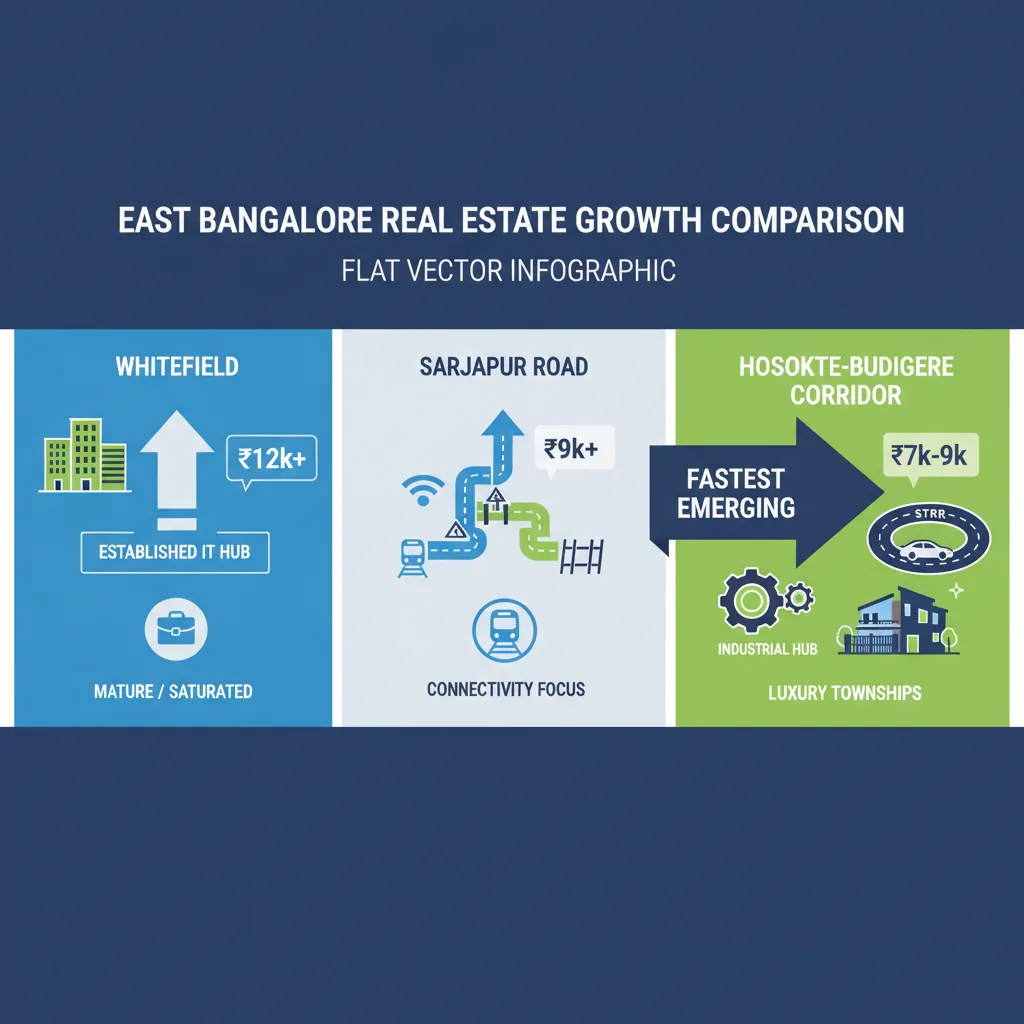
Which is the fastest-growing area in East Bangalore ? In 2026, the clear winner is the Hoskote-Budigere Cross corridor.
While Whitefield and Sarjapur Road have been the traditional champions, they are now "mature" markets—meaning they are already quite crowded and expensive. If you are looking for the area with the most rapid transformation, highest space for growth, and best future value, the spotlight has shifted toward Hoskote. This region is currently undergoing a massive "infrastructure explosion" that is turning it from a quiet suburb into the city's next big residential and industrial powerhouse.
Why This Corridor is Taking the Lead
Several factors are working together to make this the fastest-growing micro-market in East Bangalore:
- The STRR Factor: The Satellite Town Ring Road (STRR) is a game-changer. It allows residents to bypass city traffic and reach the airport or other satellite towns in record time. This has made Hoskote a preferred choice for people who want connectivity without the chaos.
- Industrial & Logistics Strength: As a major KIADB hub, Hoskote is home to hundreds of companies and thousands of employees. This creates a massive, built-in demand for quality housing and rental properties.
- Availability of Space: Unlike the cramped lanes of older East Bangalore areas, Hoskote offers wide-open spaces. This has allowed for the creation of massive, world-class developments like the Sobha Hoskote township.
- The "Neo-Whitefield" Lifestyle: Developers are now building "cities within cities" here. For example, the 300-acre Sobha Hoskote project provides high-rise luxury, schools, and offices all in one place. It offers the same lifestyle as Whitefield but with more greenery and a "future-ready" design.
Growth Comparison at a Glance (2026)
| Feature | Whitefield | Sarjapur Road | Hoskote Corridor |
|---|---|---|---|
| Market Status | Mature / Saturated | High-Growth / Busy | Fastest Emerging |
| Price Point | High (₹12k+ per sq ft) | Mid-High (₹10k+ per sq ft) | Attractive (₹7k - ₹9k per sq ft) |
| Main Driver | IT Parks & Metro | Connectivity & Schools | STRR, Industry & Townships |
| Future Potential | Stable | High | Explosive |
Is it the Right Time to Invest?
In real estate, the best time to buy is usually right before a major infrastructure project is fully finished. With the STRR opening in phases and the Purple Line Metro already serving nearby areas, the Hoskote-Budigere belt is in that "sweet spot." Prices are still lower than the Whitefield core, but they are rising steadily as more families move into large townships.
![]() Frequently Asked Questions
Frequently Asked Questions

Whitefield is better for immediate rental income because it's already full of offices. However, Hoskote is better for long-term "capital appreciation" (the value of the property growing over time) because it is still developing.
Thanks to the STRR and highway upgrades, you can usually reach the Kempegowda International Airport in 45 to 60 minutes, which is faster than from many parts of South Bangalore.
It is a 280-km ring road that connects all the satellite towns around Bangalore. It helps heavy traffic avoid the city center, making local travel much faster for residents.
Yes. With growth comes infrastructure. Several multi-specialty hospitals and clinics have opened along Old Madras Road and near the Hoskote town center.
Most people move for more space, cleaner air, and better-planned communities. Large townships like Sobha Hoskote offer a resort-like life that is hard to find in the congested city center.
Yes. The rise of gated communities and townships has brought 24/7 security, well-lit roads, and a family-friendly environment to the region.
Most large, reputable townships in this area use advanced rainwater harvesting and water treatment plants to ensure a sustainable water supply for their residents.
By 2031, Hoskote is expected to be a fully integrated urban hub with its own shopping malls, tech parks, and a mature residential ecosystem, very similar to how Whitefield looked 10 years ago.
 24/7 Support
 Free Site Visit
 Unmatched Price